The short answer
A genuine, natural Grade A jadeite bangle can cost anywhere from under $50 to well into six figures. That is not a dodge - it is the single most important thing to understand about jade. The same word, "jadeite", covers a tiny soft-toned bangle you could wear every day and a flawless imperial-green stone that sells at auction for the price of a house.
For most people shopping for a real, wearable Grade A piece, the everyday range sits between roughly $100 and $1,000. What moves a bangle within - and far beyond - that range is not whether the stone is real. It is colour, translucency, size, and craft.
What actually drives the price
Four things do almost all the work. Understanding them is how you tell a fair price from a fantasy one.
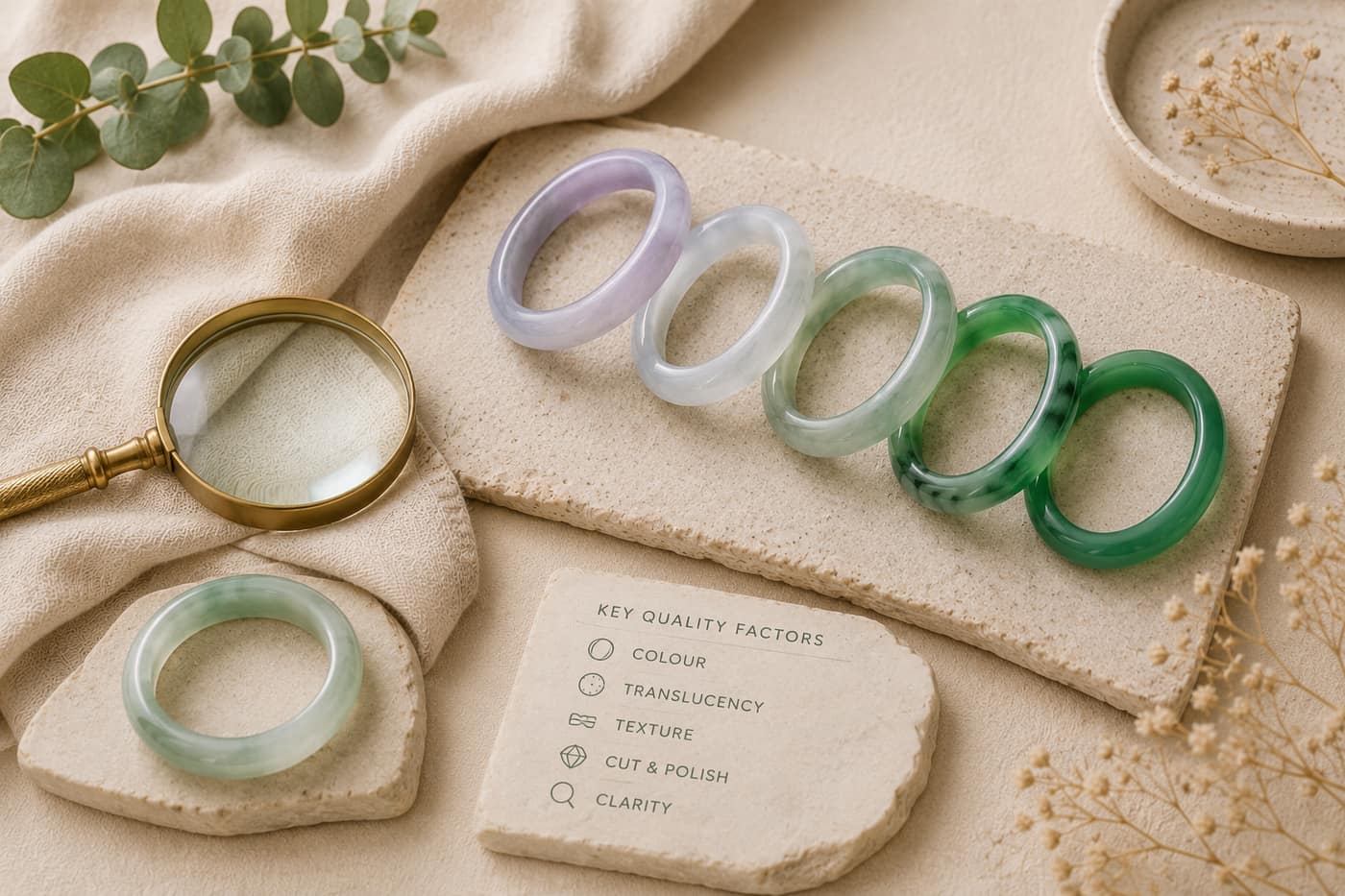
Colour. Even, saturated colour is the rarest thing in jadeite. A vivid, uniform "imperial" green or a rich, clean lavender can multiply a price many times over. A softer, more mottled, or paler tone is far more common - and far more affordable - while being exactly as genuine.
Translucency. Hold a piece to the light. The further light travels into the stone - from opaque, through "semi-icy", to glass-like - the more valuable it becomes. Most affordable Grade A jade is on the more opaque end. That is normal, not a defect.
Size and form. Large, clean stones are exponentially rarer than small ones, because nature rarely grows big pieces without a stone line (石纹) or cotton (棉) running through them. A wide, thick bangle in even colour is one of the hardest things in all of jade to find, which is why it costs the most.
Craft and setting. Cutting, polish, and proportion matter, as does how a stone is set. Setting smaller pieces in silver rather than gold is one honest way to keep the stone the focus and the price within reach.
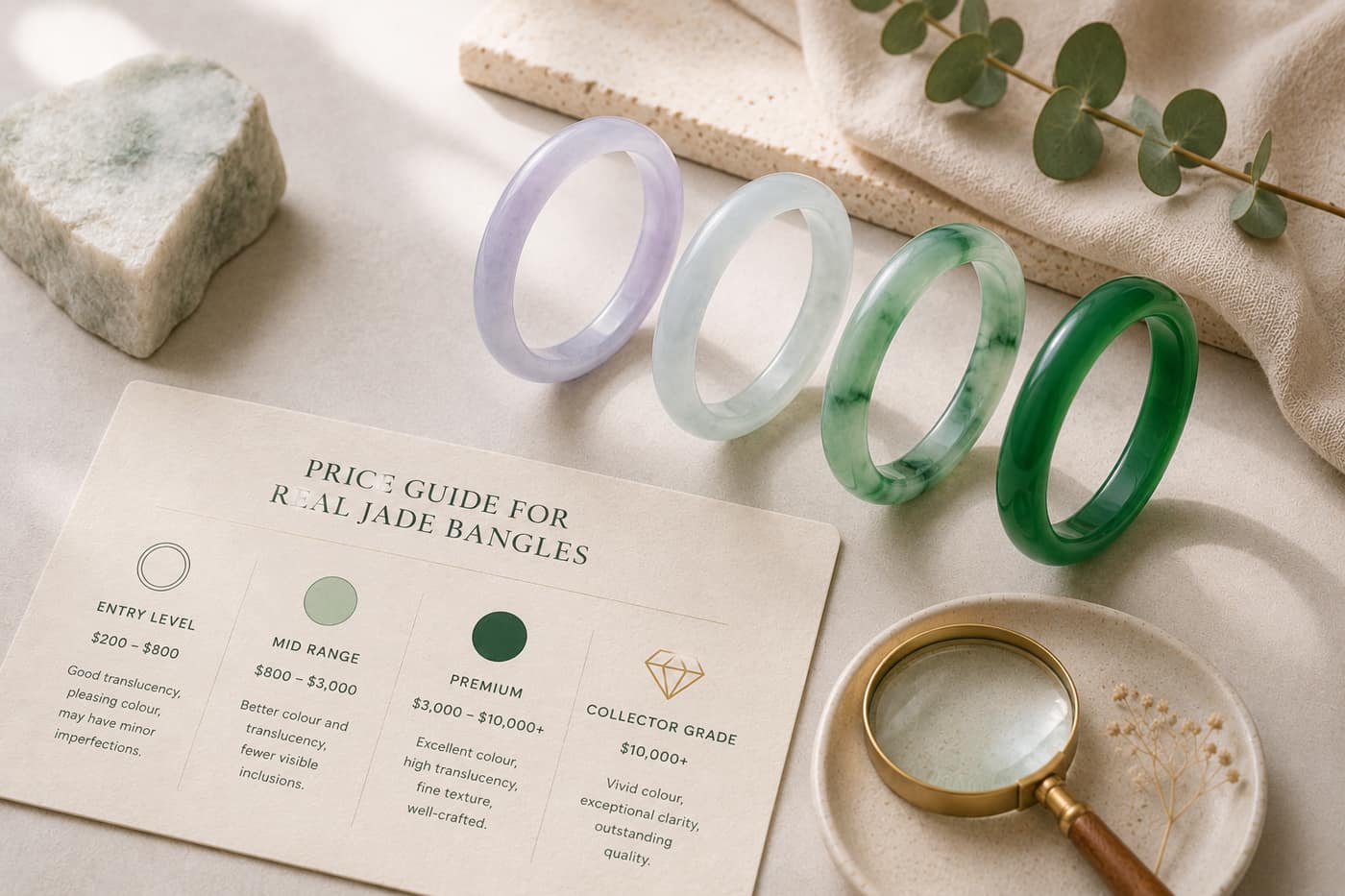
A rough price map for Grade A jadeite
These are broad guides for natural, untreated Grade A jadeite, not fixed rules:
- Under $50: small pieces - thin rings, modest pendants, bead bracelets - in softer tones with visible natural inclusions.
- $100 to $1,000: the everyday-wearable range for genuine Grade A bangles and statement pendants, in pleasant but not intense colour, with good craft.
- $1,000 to $10,000: stronger, more even colour, better translucency, larger and cleaner stones.
- $10,000 and up: the rare combination of vivid even colour, high translucency, and generous size. This is the collector and auction tier.
The lesson is simple: a low price is not, by itself, a warning sign. A low price paired with a "too good to be true" appearance is.
Why cheap jade is not always fake
The myth that "real jade is always expensive" costs honest buyers a great deal. It is not true. A small bangle in a quiet, soft green, with a faint stone line and a little cotton, can be completely natural Grade A jadeite and still be inexpensive - precisely because it lacks the vivid colour and glassy translucency that command high prices.
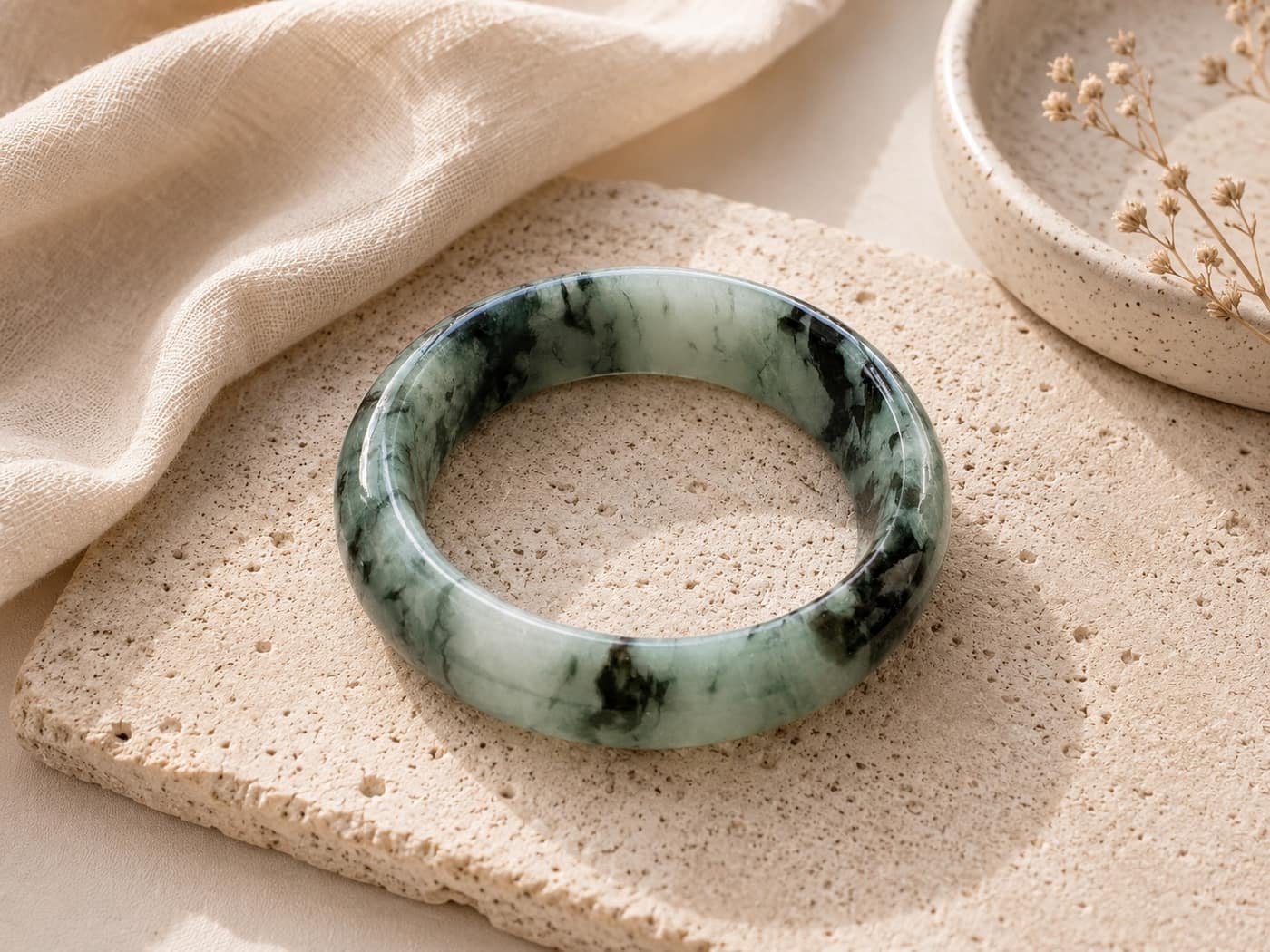
Genuine jadeite carries the marks of having grown in the earth: fine stone lines, soft cotton clouds, slight colour variation. We call this 包容 - the stone's natural inclusiveness. These are not flaws to be hidden. They are, to a real collector, part of the proof and part of the beauty. The honest, affordable end of the market is full of stones like this.
When a low price really is a red flag
The danger is not cheapness. It is the wrong kind of perfection at a cheap price. Be cautious when a piece is:
- Flawless and glassy, intensely coloured, and somehow inexpensive. That combination is rare in nature and common in treated jade.
- Suspiciously even in colour, with a faint blue or "fishnet" web under magnification - a sign of polymer filling (Grade B) or dye (Grade C).
- Sold with no willingness to confirm authenticity - no certificate available, no inspection video, no lifetime guarantee.
Grade B jade has been bleached and resin-filled; Grade C has been dyed; Grade B+C is both. They look spectacular for a while and then dull and crack. Only natural, untreated Grade A keeps its beauty - and that is the only grade worth buying at any price.
How to buy affordable jade with confidence
You do not need a big budget to own real jade. You need a seller who tells you the truth about what you are buying. Before you pay, you should be able to:
- See the piece photographed honestly in natural light, inclusions and all.
- Read a plain description of its colour, translucency, size, and any natural marks.
- Confirm it is natural, untreated Grade A - ideally backed by a lifetime authenticity guarantee.
- Request a short inspection video if you want to watch the stone move in the light.
Every piece at Jadeite Pavilion is natural, untreated Grade A jadeite, sourced direct from Burma and Guatemala and guaranteed for life. Genuine pieces start from just $18, because real jade should be something you can actually own - not only something you read about at auction.