Not All Jade Is Created Equal
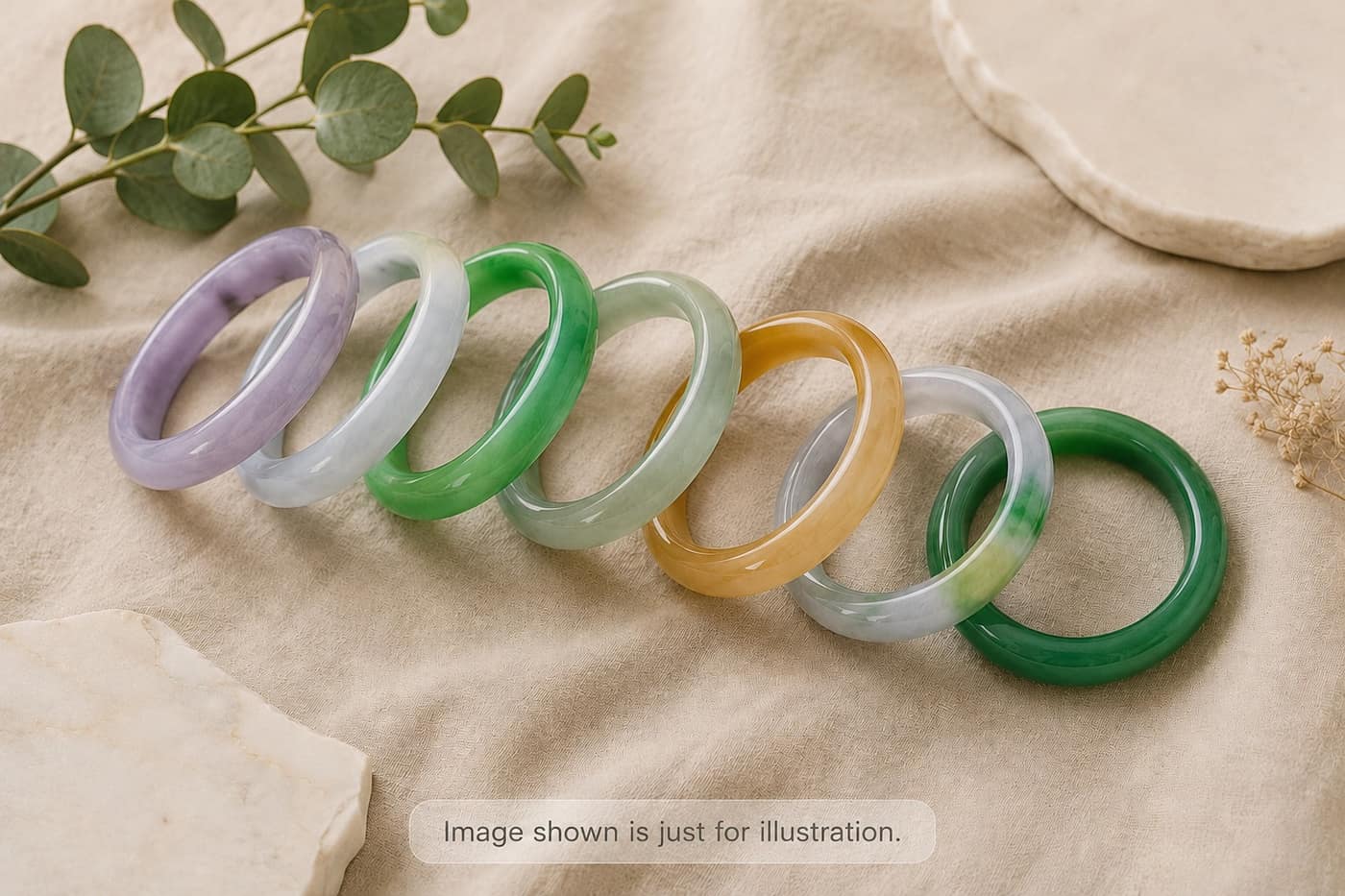
Walk into any jewellery market in Asia and you will see "jade" everywhere.green bangles, white pendants, lavender beads. But the word "jade" actually covers two completely different minerals: jadeite and nephrite.
Most of what the world calls jade is nephrite. It is softer, more abundant, and found in dozens of countries.Canada, Russia, New Zealand, China, Australia. Nephrite is a beautiful stone in its own right, but it is not what collectors prize above all else.
Jadeite is something else entirely. It is harder (6.5-7 on the Mohs scale versus nephrite's 6-6.5), denser, and capable of colours nephrite simply cannot produce: vivid imperial green, electric blue-water, translucent icy white, and deep lavender. Of the two jades, jadeite is the king.
What Makes Jadeite So Rare?
Jadeite forms only under extreme geological conditions.high pressure and relatively low temperature, deep within subduction zones where tectonic plates collide. These conditions are rare, which is why gem-quality jadeite is found in very few places on Earth.
While trace amounts of jadeite exist in Japan, Kazakhstan, and a few other locations, only two countries produce gem-quality jadeite in meaningful quantities:
Burma (Myanmar): The Heartland
The Kachin State in northern Myanmar has been the world's primary source of fine jadeite for centuries. Burmese jadeite is renowned for its extraordinary range of colours and the unmatched translucency of its finest stones. The legendary "imperial green" - vivid, even, and glass-like - is almost exclusively Burmese.
Burmese jadeite is also the rarer and, today, the more expensive of the two sources. Its finest deposits are being worked out, mining and export have grown harder and more tightly controlled, and global demand keeps climbing - so top Burmese material now commands the highest prices in the entire jade market, with the very best stones selling for millions at auction.
When gemological laboratories issue certificates for jadeite, Burmese origin is the gold standard. The most reputable labs - including those in Hong Kong, where the majority of the world's jadeite is traded - test for natural, untreated Grade A status, confirming the stone has not been dyed, bleached, or polymer-impregnated.
Guatemala: The New World Source
Long before Europeans arrived in Central America, the Maya prized jadeite above gold. Guatemalan jadeite was lost to history for centuries until deposits were rediscovered in the Motagua Valley in 1974. Today, Guatemala is the only other significant source of gem-quality jadeite in the world - and, crucially, it is real jadeite: the very same mineral as Burmese stone, certifiable as natural Grade A by the same laboratories.
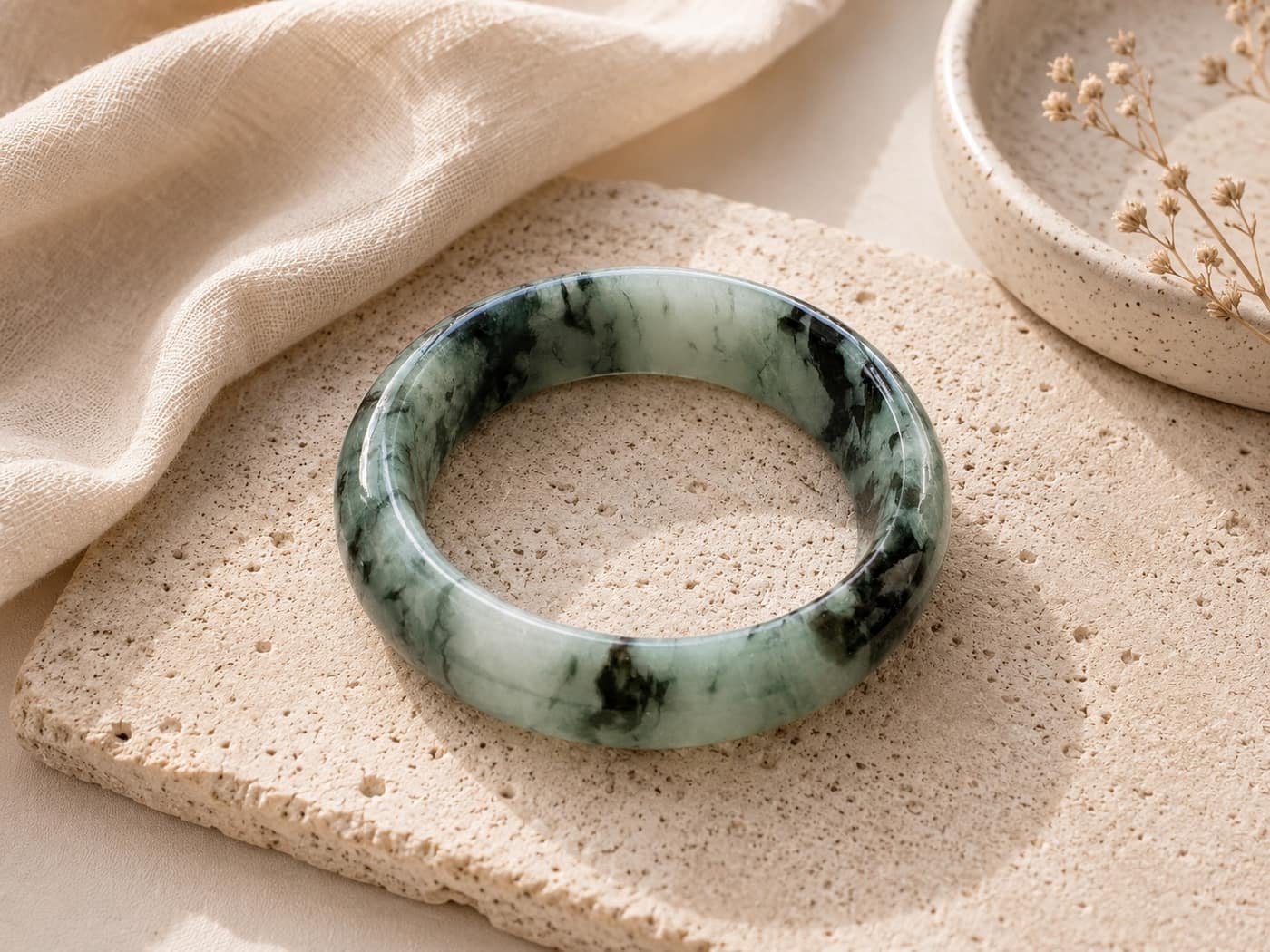
Guatemalan stones tend toward blue-green, black, and a distinctive lavender that differs from Burmese lavender. As a group they are often more affordable than Burmese jadeite, which makes Guatemala a wonderful place to find genuine Grade A jade at an accessible price. But do not mistake affordable for lesser: the finest high-end Guatemalan stones - richly translucent blue-green, or deep black 墨翠 that glows green under a torch - are genuinely rare and can be expensive in their own right. Origin sets the starting point; colour, translucency, size, and craft still decide the final price.
The Grading: What Does Grade A Actually Mean?
Jadeite grading is not about colour or beauty - it is about treatment. The four grades:
| Grade | Treatment | What it means | Over time |
|---|---|---|---|
| Grade A | None | 100% natural, untreated. Colour and translucency are exactly as nature made them. | Stable for generations. The only kind we sell. |
| Grade B | Bleached + polymer resin | Acid-bleached to strip impurities, then resin-filled to fake clarity. | Resin yellows; the structure weakens. |
| Grade C | Dyed | Colour artificially added or deepened with dye. | Colour fades; dye can irritate skin. |
| Grade B+C | Bleached, filled & dyed | The most heavily treated - both B and C processes. | Fails fastest; worth a fraction of natural jadeite. |
At Jadeite Pavilion, every piece we sell is Grade A, natural, untreated jadeite. If a piece bought from us is tested by an independent, accredited gemological lab and found to be anything else, we refund you in full - no time limit.
How to Tell Jadeite from Nephrite
A few practical differences to look for:
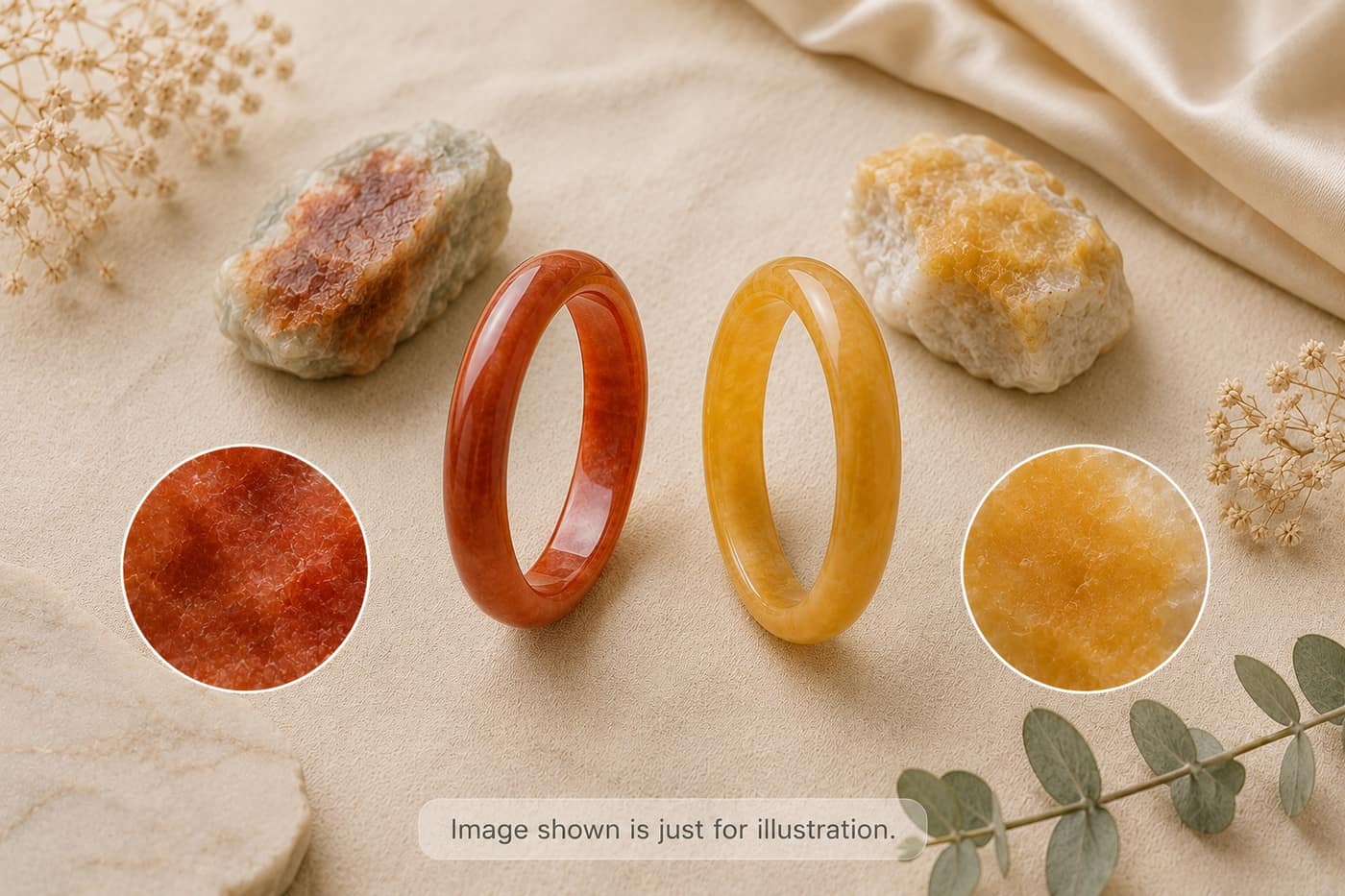
- Colour range: nephrite is typically creamy white, spinach green, or grey-green. Jadeite can be vivid green, lavender, blue, honey, white, or black.
- Translucency: fine jadeite can be almost glass-like. Nephrite is usually opaque to slightly translucent.
- Density: jadeite is heavier. Pick up two similar-sized pieces and the jadeite will feel noticeably denser in your hand.
- Price: a fine jadeite bangle can sell for millions at auction. Comparable nephrite bangles rarely exceed a few hundred dollars.
Why This Matters When You Shop
Understanding the difference between jadeite and nephrite.and between treated and untreated.is the single most important thing to know before buying jade. A piece sold as "jade" with no further specification could be nephrite, could be treated jadeite, or could even be a lookalike mineral like serpentine or aventurine.
When you buy from us, you are getting jadeite, the real thing, the king of jade, sourced from Burma or Guatemala, untreated, and priced without the boutique markup that usually puts genuine jadeite out of reach. From $18 to collector-grade pieces, every stone is one of one.
See the difference for yourself.