More Than Fifty Shades of Green
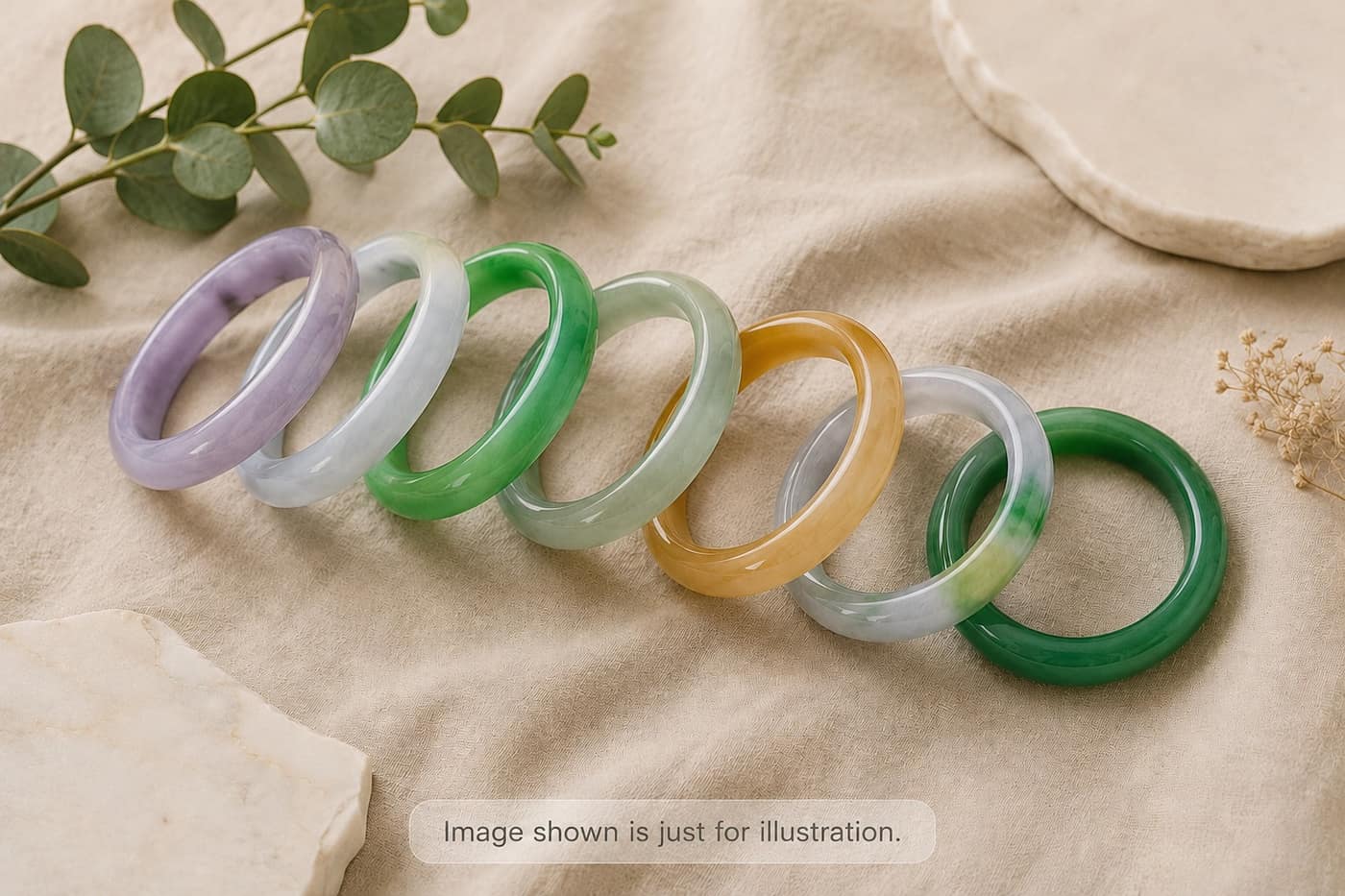
When most people think of jade, they picture green. But jadeite occurs in almost every colour imaginable: green, lavender, white, blue, yellow, red, orange, black, and grey. Each colour is caused by different trace minerals within the stone, and each is completely natural in Grade A jadeite.
Colour is one of the biggest factors in jadeite's value, but rarity matters more than personal preference. Imperial green commands the highest prices, while everyday greens and whites are the most accessible. Understanding the full colour spectrum helps you appreciate what you are looking at, and what you are paying for.
The Green Family
Green jadeite ranges from pale, watery tones to deep, saturated emerald. The main varieties:
- Imperial Green (帝王绿): the most prized colour in all of jade. A vivid, saturated emerald green with even distribution and high translucency. Found almost exclusively in Burmese deposits. Top pieces sell for millions at auction.
- Apple Green (苹果绿): a bright, cheerful yellow-green. More affordable than imperial but still vibrant. Popular for bangles and pendants.
- Sunny Green / Bright Green (阳绿): warm-toned green that sits between apple and imperial. Excellent translucency and a lively, fresh appearance.
- Dry Green (干青): an intense, saturated green with an opaque, "dry" texture and little translucency. The colour itself can be as strong as imperial green, but because light does not pass through the stone, the price stays far more accessible. A good choice if you love deep green without the imperial-green price.
- Variegated Green (花青): green that is uneven by nature, drifting between deeper and lighter patches or streaks rather than sitting evenly across the stone. "花" means flowered or variegated. That lively, moving colour is part of its charm, and the natural unevenness keeps it more affordable than perfectly even green.
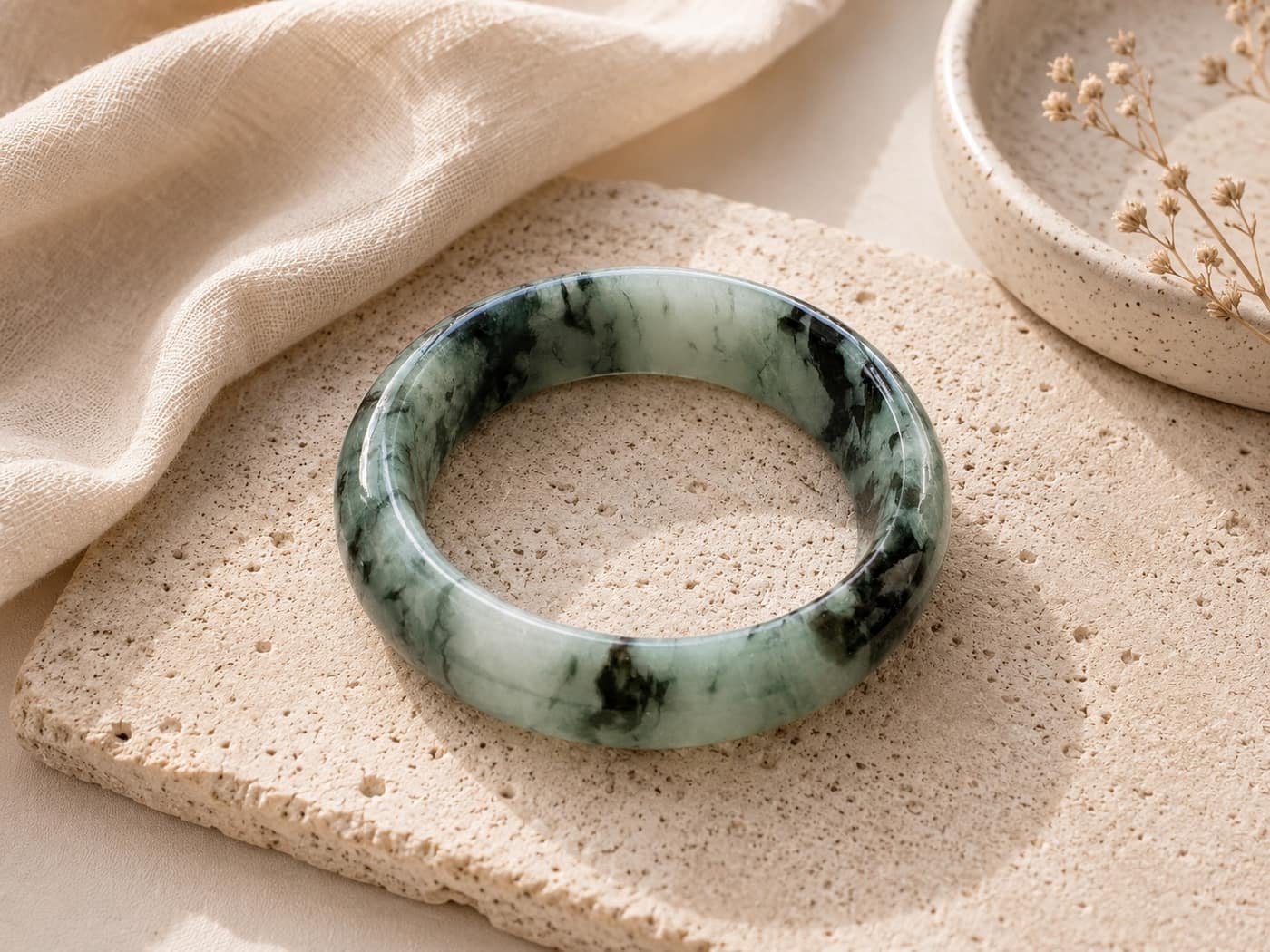
- Olive Green (油青): a darker, muted green with grey or blue undertones. Very common and affordable. Often has a slightly oily lustre.
- Guatemala Green: green jadeite from the Motagua Valley in Guatemala, the only source of gem-quality jadeite besides Burma. Its greens tend to be slightly more blue or grey-toned than Burmese green, often with a mottled green-and-white pattern that the ancient Maya prized. A distinct origin with its own character, and every bit as genuine Grade A.
- Floating Flower (飘花): not a single colour but a pattern. Wisps or clouds of blue-green or dark green float inside a lighter, often icy base. Each piece has a unique pattern like a watercolour painting.
Beyond Green
- Lavender (紫罗兰): ranges from pale lilac to rich violet. Caused by trace manganese and iron. Highly prized, especially when combined with green (called "spring colours" or 春带彩). Burma produces the deepest lavender; Guatemala has a distinctive lilac tone.
- White & Icy (冰种/玻璃种): pale, near-colourless jadeite. "White" describes a soft, milky body colour, while "Icy" describes high translucency that makes the stone look like frozen water. In the finest icy and "glass species" pieces, the value comes from transparency and glow rather than from colour at all.
- Blue-Water (蓝水): a cool blue-green with high translucency, like looking through tinted seawater. Primarily Burmese. Increasingly popular with younger collectors.
- Blue-Grey (蓝灰): a cool, muted stone sitting between blue-water and grey - calm and understated rather than vivid. It suits modern, minimal pieces and wears quietly with anything. An easy-to-wear, affordable tone.
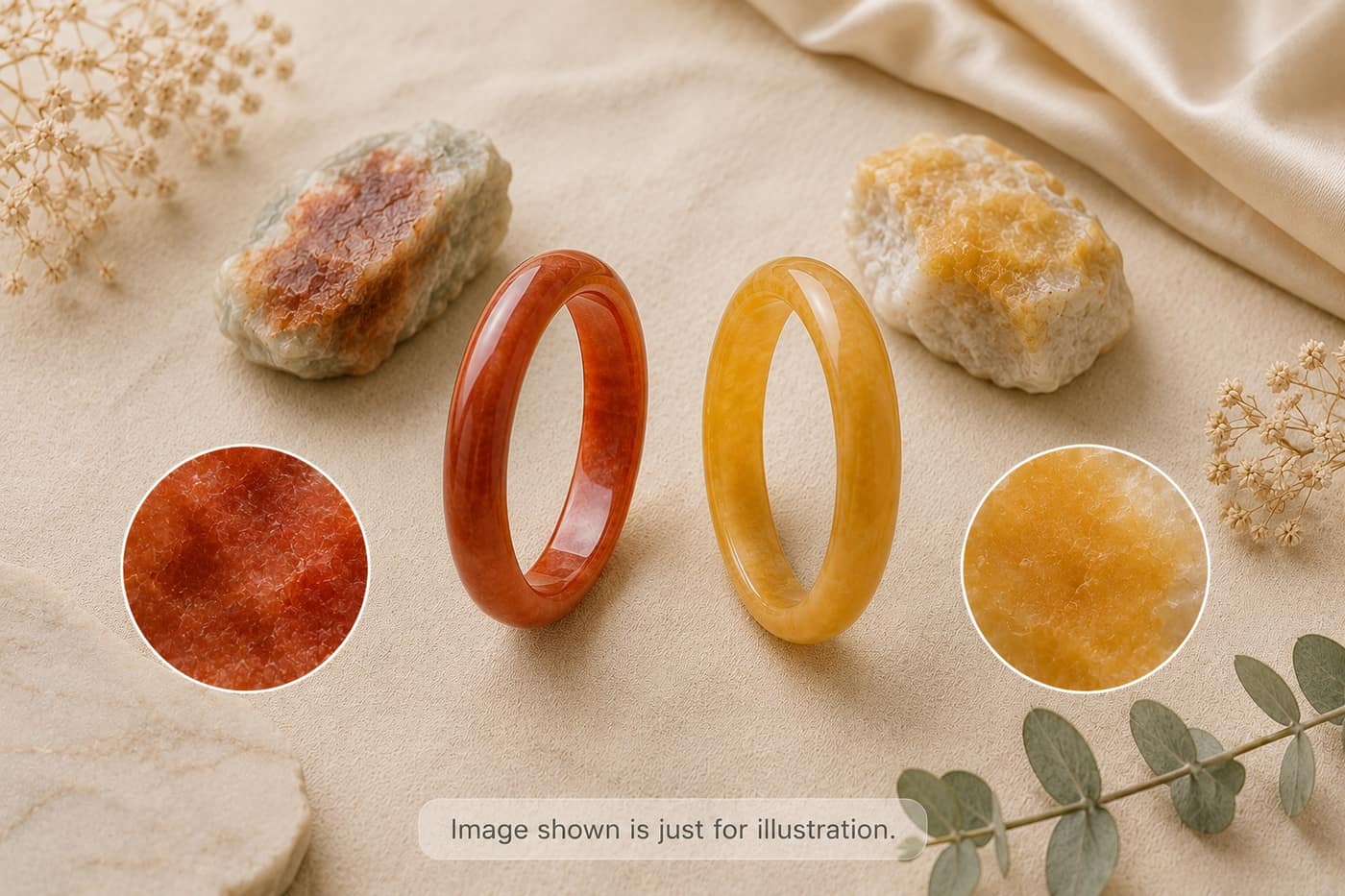
- Honey / Yellow (黄翡): warm yellow to orange-brown caused by iron oxidation. Fine honey jadeite with good translucency is quite rare. More on this in our article about burnt colour jadeite.
- Red (红翡): deep reddish-brown, also from iron oxidation. Natural red jadeite is uncommon and can be certified Grade A. Often found as a "skin" on the outside of boulders.
- Black (墨翠): appears black in normal light but glows deep green when you hold a torch light behind it. Caused by high concentrations of iron. Guatemalan deposits produce some of the finest black jadeite.
- Black Ink Wash (乌鸡): named after the black-skinned wu ji chicken, this is a smoky grey-to-black jadeite marbled with lighter, cloud-like streaks, like ink washed across paper. It differs from 墨翠, which reads as solid black and glows green under a torch; 乌鸡 is softer and more mottled, prized for that painterly grey movement. Naturally coloured and certifiable Grade A.
What Affects Colour Value?
Three things determine how valuable a particular colour is:
- Saturation: how vivid and intense the colour is. More saturated = more valuable.
- Distribution: how evenly the colour spreads through the stone. Even colour is worth more than patchy colour.
- Translucency: how much light passes through. A vivid green that is also translucent is worth exponentially more than the same green in an opaque stone.
The combination of all three at their highest is what makes imperial green so extraordinary, and so expensive. But every colour has its own beauty. An icy white pendant with perfect translucency can be just as captivating as a green one.