Clearing Up the Myths
Jadeite is surrounded by half-truths that cost buyers money and confidence. Here are the most common misconceptions, and what is actually true.
"Flawless jadeite is the best jadeite"
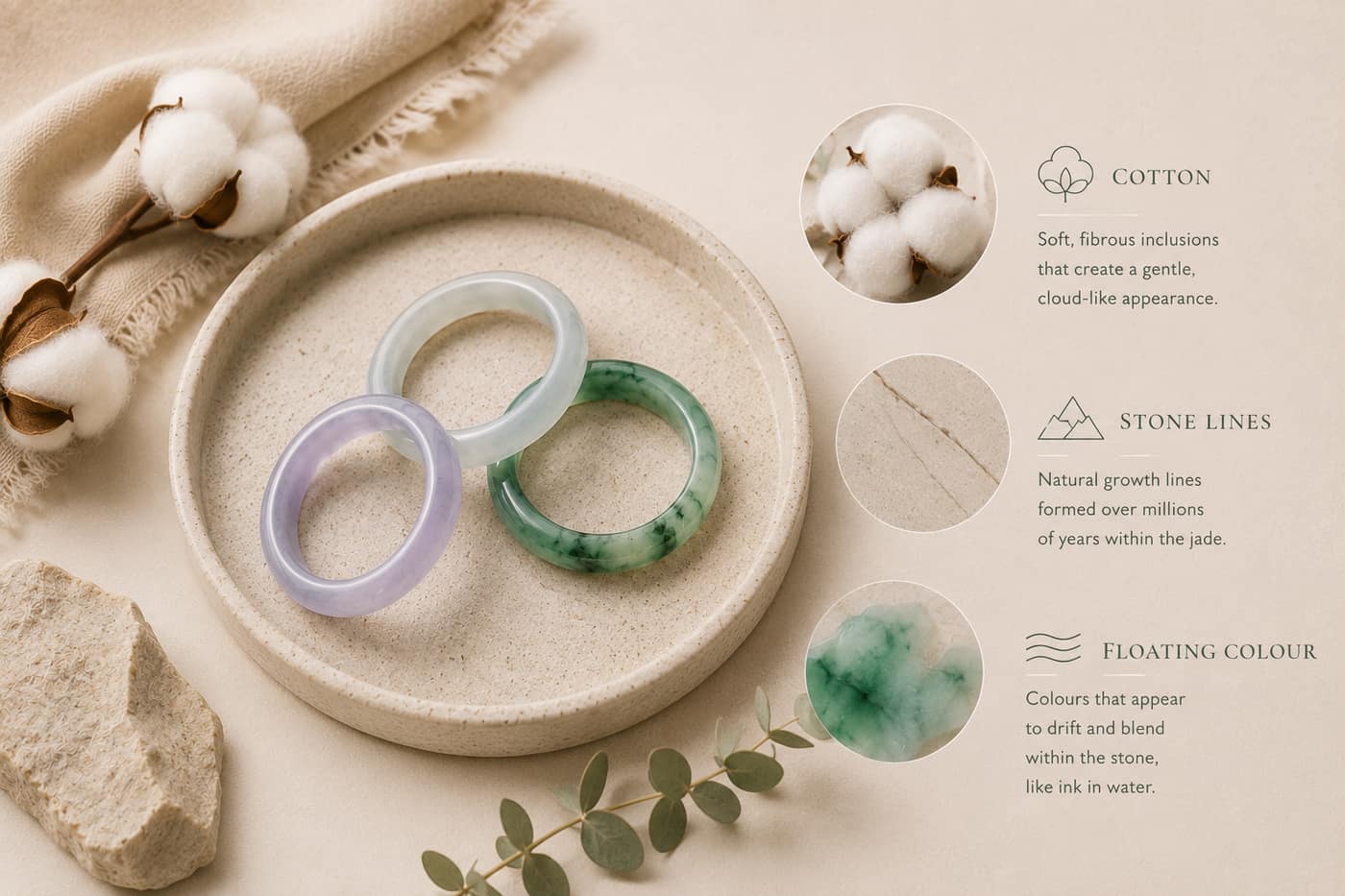
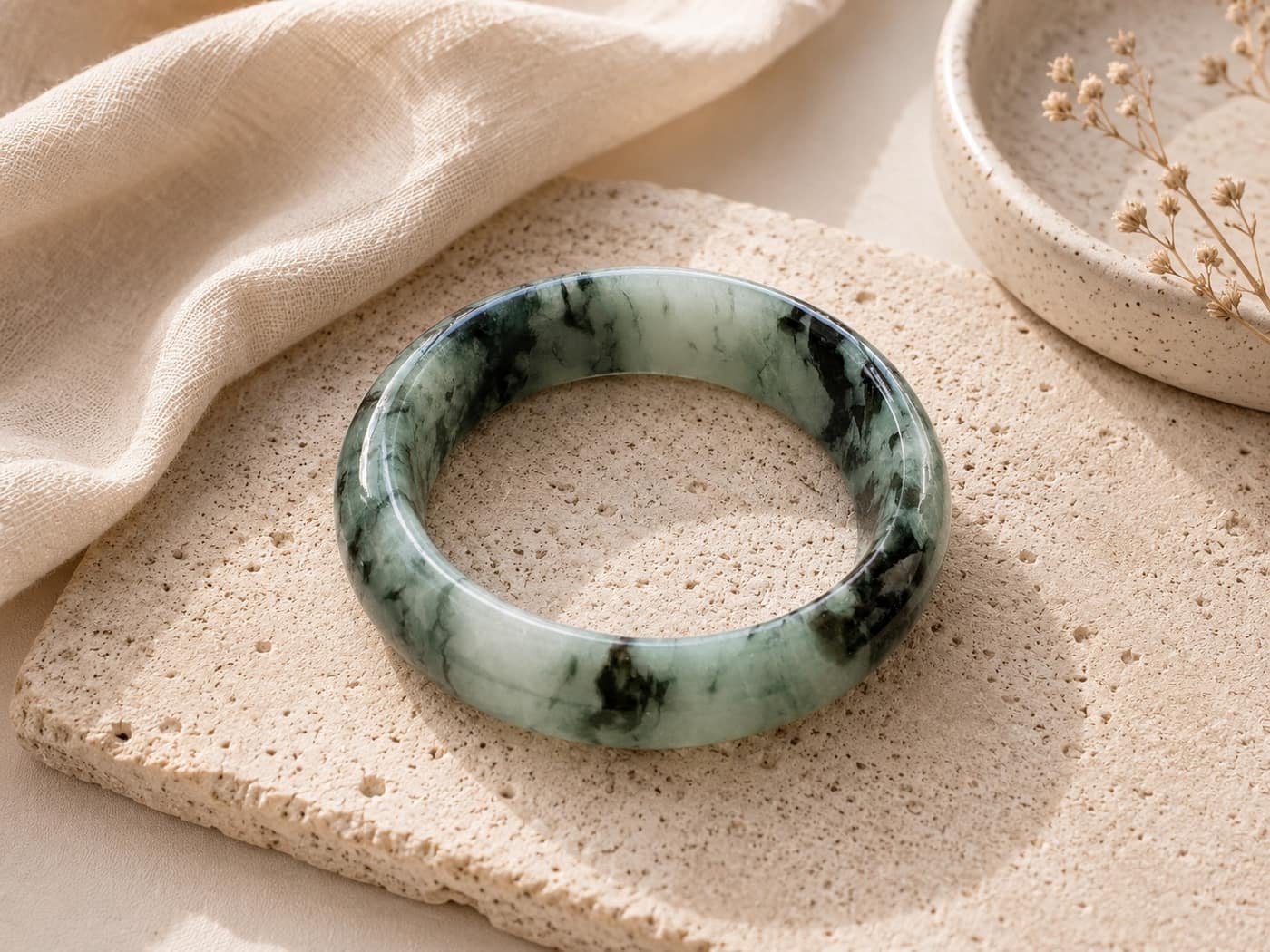
Natural jadeite almost always carries some cotton, fine stone lines, or colour variation. A piece that looks completely flawless at a low price has usually been bleached and polymer-filled (Grade B) or dyed (Grade C). Honest, visible natural characteristics are a sign of a genuine, untreated stone - not a defect.
"All jade is the same"
Most "jade" on the market is nephrite - softer, more common, and far less valuable than jadeite. Only jadeite produces vivid imperial green, lavender, and glassy translucency, and only two places on Earth produce gem-quality jadeite: Burma (Myanmar) and Guatemala.
"A stone line means the piece is cracked"
A stone line (石纹) is a healed internal vein, smooth and structurally sound. A crack (裂) is an open fracture. They are not the same thing. We disclose cracks separately and clearly, so a stone line is never mistaken for damage.
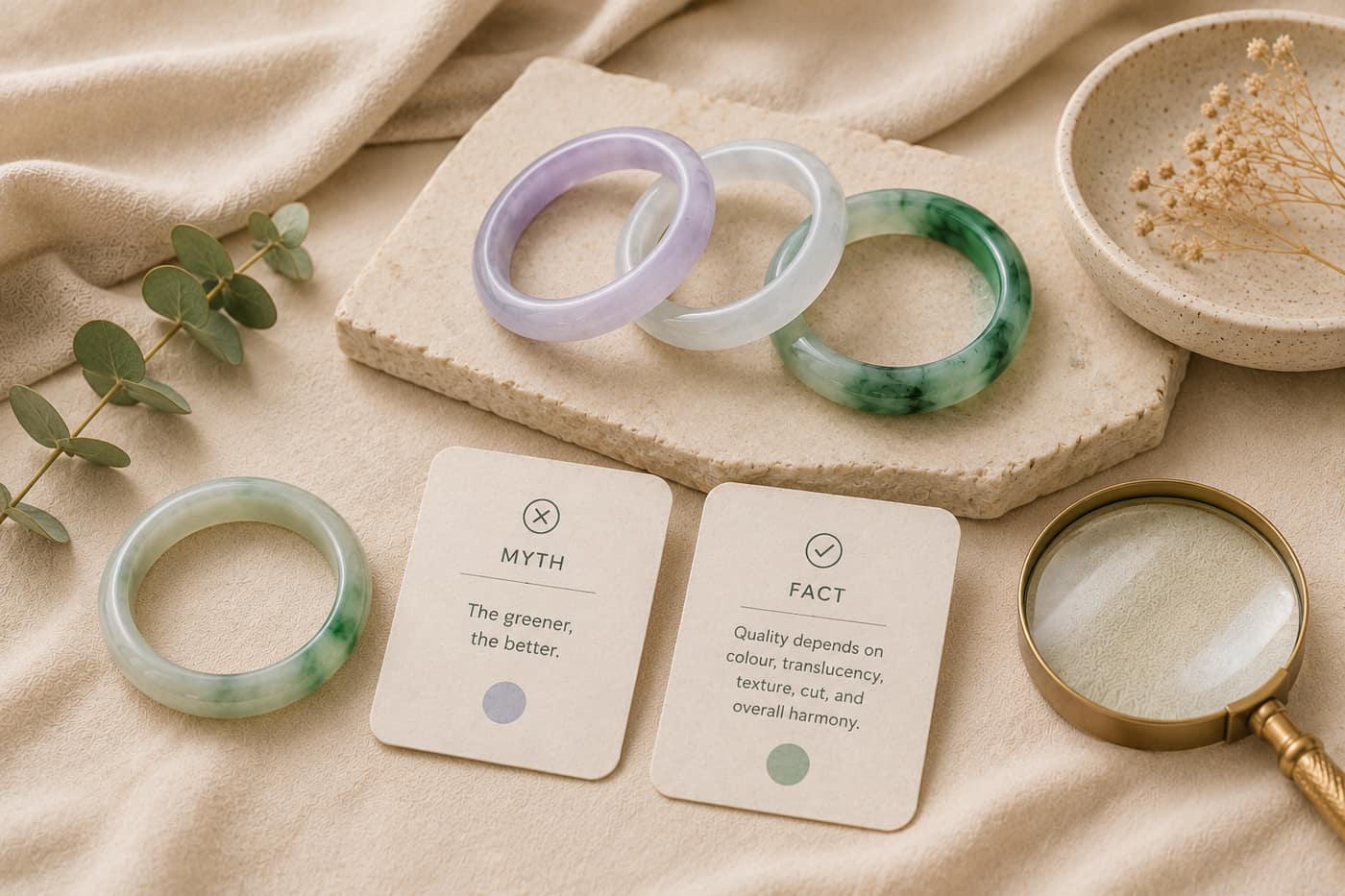
"Greener is always more valuable"
Colour is only one of four quality factors. A translucent icy white or a richly saturated lavender can be worth far more than a dull, opaque green. Translucency, texture, and craftsmanship matter just as much as colour.
"You cannot buy real Grade A jadeite affordably"
Genuine Grade A jadeite is expensive mainly because of gold settings and dealer markup. Set a real stone in sterling silver and sell it directly, and natural jadeite becomes attainable. Every piece we sell is Grade A, with a lifetime authenticity guarantee, from everyday pieces upward.