The Marks of a Genuine Stone
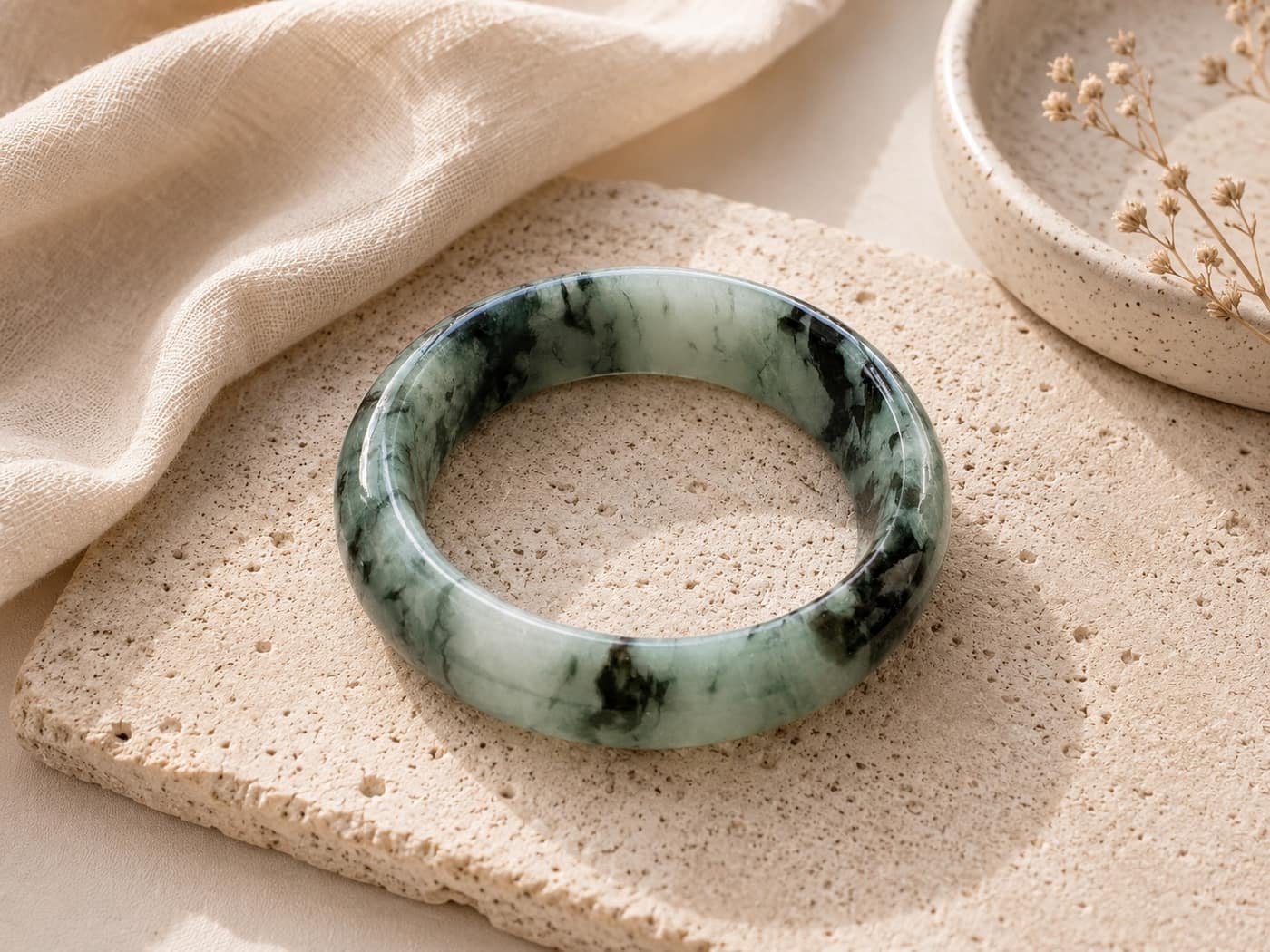
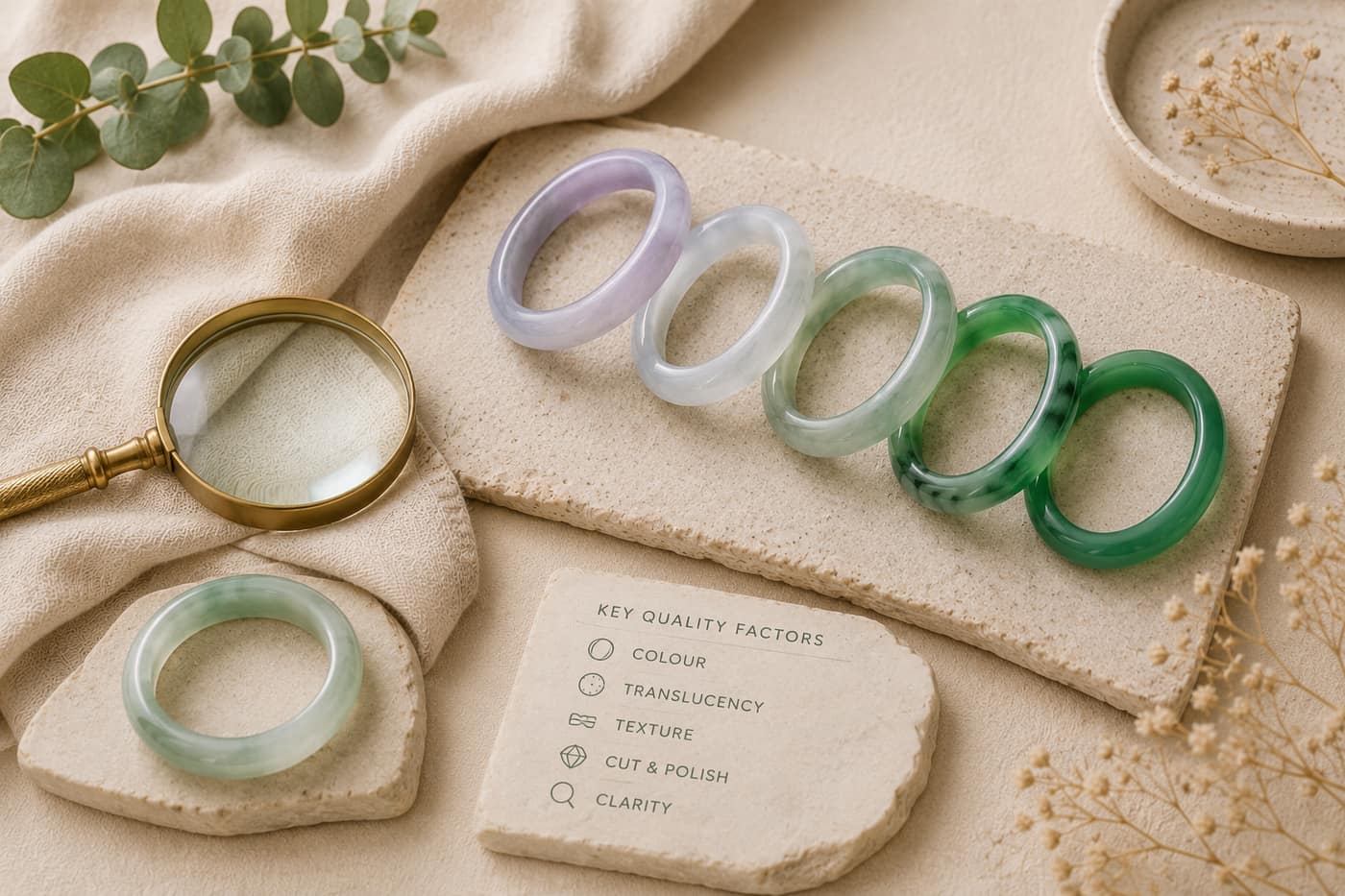
When a first-time buyer looks closely at natural jadeite, they often notice cloudy patches, fine lines, or drifting colour and worry something is wrong. In fact, the opposite is true. These features are the fingerprints of genuine, untreated Grade A jadeite. A stone that is perfectly clear and evenly coloured at a low price has almost always been bleached, filled, or dyed.
We photograph and describe these characteristics openly on every product page, because understanding them is the difference between buying with confidence and buying blind.
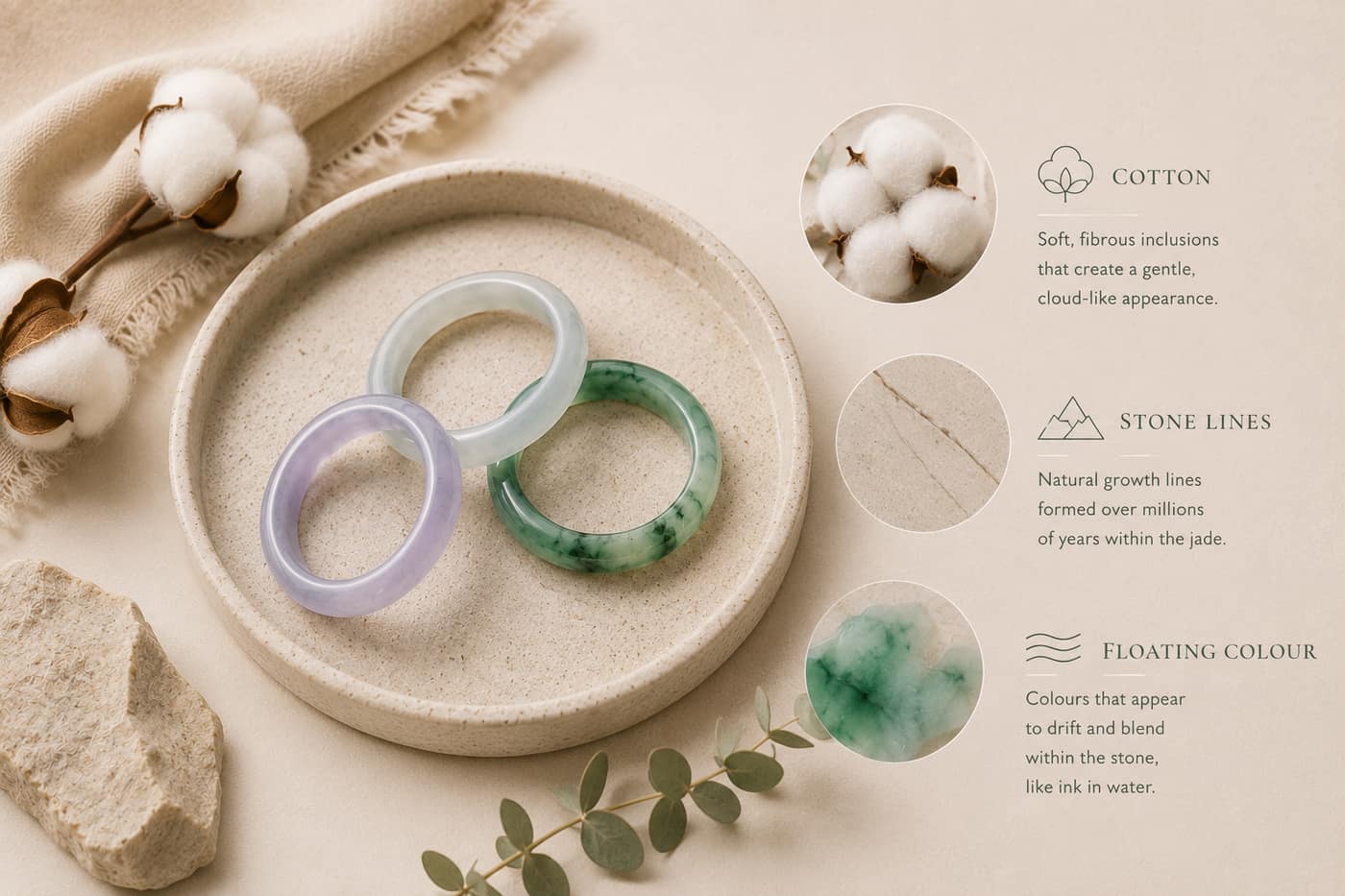
Cotton (棉)
Cotton, or mian, refers to soft, white, cloud-like inclusions suspended inside the stone. It forms as the jadeite crystallises over millions of years, and it is especially visible in translucent and icy pieces, where light reveals everything inside.
Far from a flaw, cotton gives natural jadeite its depth and movement. In lavender and icy stones, the play of cotton against the light is part of what makes them beautiful. Heavy, dense cotton can reduce transparency; light, drifting cotton is simply the stone breathing.
Stone Lines (石纹) - and How They Differ from Cracks
A stone line, or shiwen, is a fine, healed vein in the crystal structure. Think of the grain running through a block of marble: it is part of how the material formed, and it does not compromise strength. Stone lines are often only visible when light catches them at an angle.
- Stone line (石纹): internal, healed, smooth to the touch. Does not catch a fingernail. Normal and natural.
- Crack (裂): an open fracture that can catch a fingernail and may affect durability. We disclose these separately and clearly on the product page.
The honest checklist on every listing states cracks plainly, so you never have to guess which one you are looking at.
Floating Colour (飘花)
Floating colour, or piaohua, describes wisps or clouds of green or blue-green colour suspended in a lighter, often icy base. No two patterns are alike, which is exactly why collectors love it: each piece is a one-of-a-kind watercolour in stone.
Floating colour is entirely natural in Grade A jadeite and, in fine icy stones, is one of the most sought-after effects of all.
Why We Show Them
Every characteristic on this page is a reason to trust what you are buying, not to doubt it. We would rather show a natural inclusion than hide it. If you ever want a closer look before you buy, we will send torchlight, daylight, indoor, or 360° inspection videos of any piece.