Real, Treated, and Fake Are Three Different Things
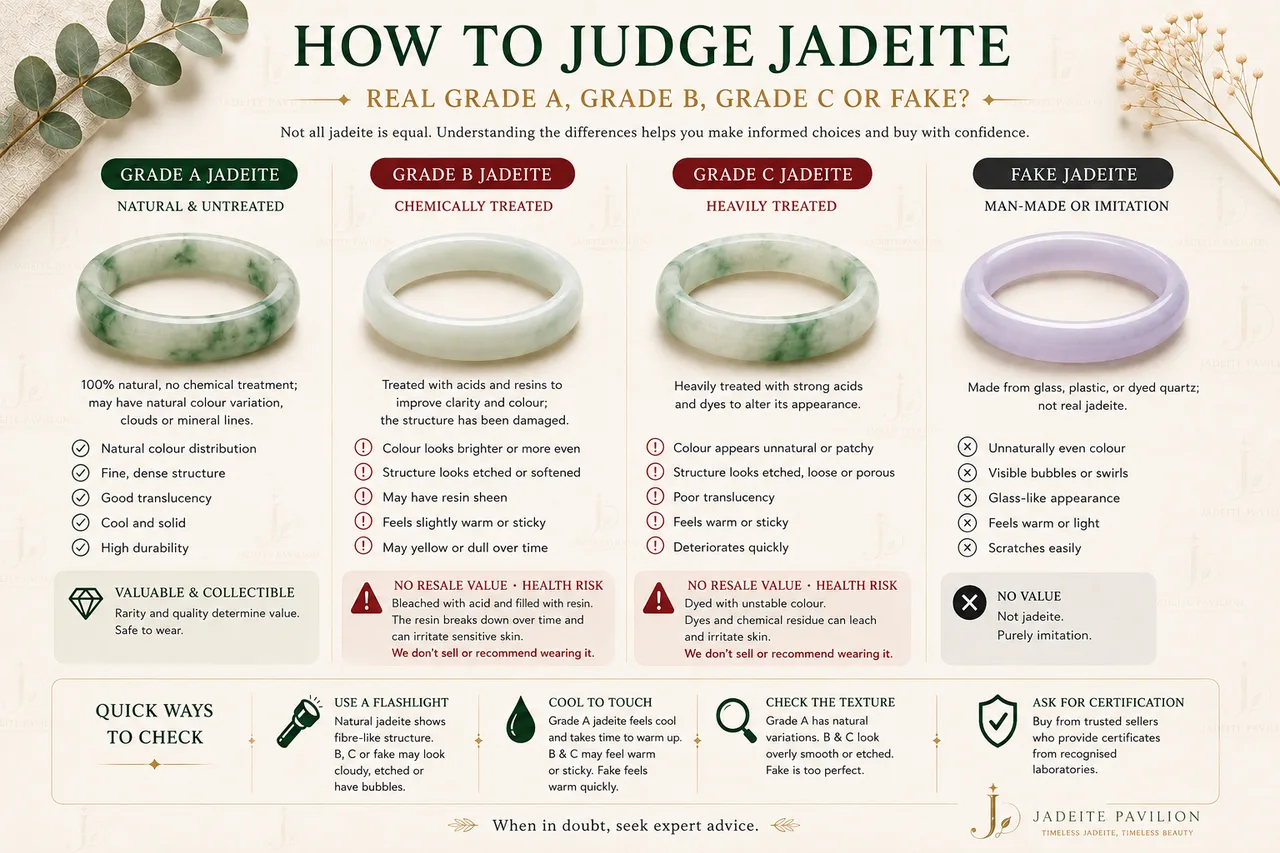
"Is my jade real?" is really three questions in one. A piece can be the wrong stone altogether (glass, dyed quartz, or nephrite sold as jadeite), it can be genuine jadeite that has been chemically treated, or it can be natural, untreated jadeite. Only the last is what the trade calls Grade A, and only Grade A holds its value. Understanding the difference is the whole game.
What Grade A, B, and C Actually Mean
The most important thing to know is that grade describes treatment, not quality. A pale, modest, inexpensive stone can still be Grade A. The letters tell you what has been done to the jadeite, not how pretty it is.
- Grade A - natural, untreated jadeite. Its colour and translucency are exactly what nature produced. It may have been carved and polished, but nothing has been added or removed chemically. This is the only kind we sell.
- Grade B - genuine jadeite that has been bleached with acid to strip out brown or grey, then impregnated with polymer resin to restore clarity. It looks clean and glassy at first, but the resin yellows and crazes over years, and the stone is worth a fraction of Grade A.
- Grade C - jadeite that has been dyed to add or deepen colour. The colour is not natural and can fade. Many pieces are B+C: bleached, filled, and dyed together.
B and C are not "fake" jade in the sense of being the wrong mineral. They are real jadeite that has been altered. But they are sold at a small fraction of Grade A prices in the trade, and a piece passed off as Grade A when it is actually B or C is the most common way buyers lose money.
Real Jade Is Not Always Expensive
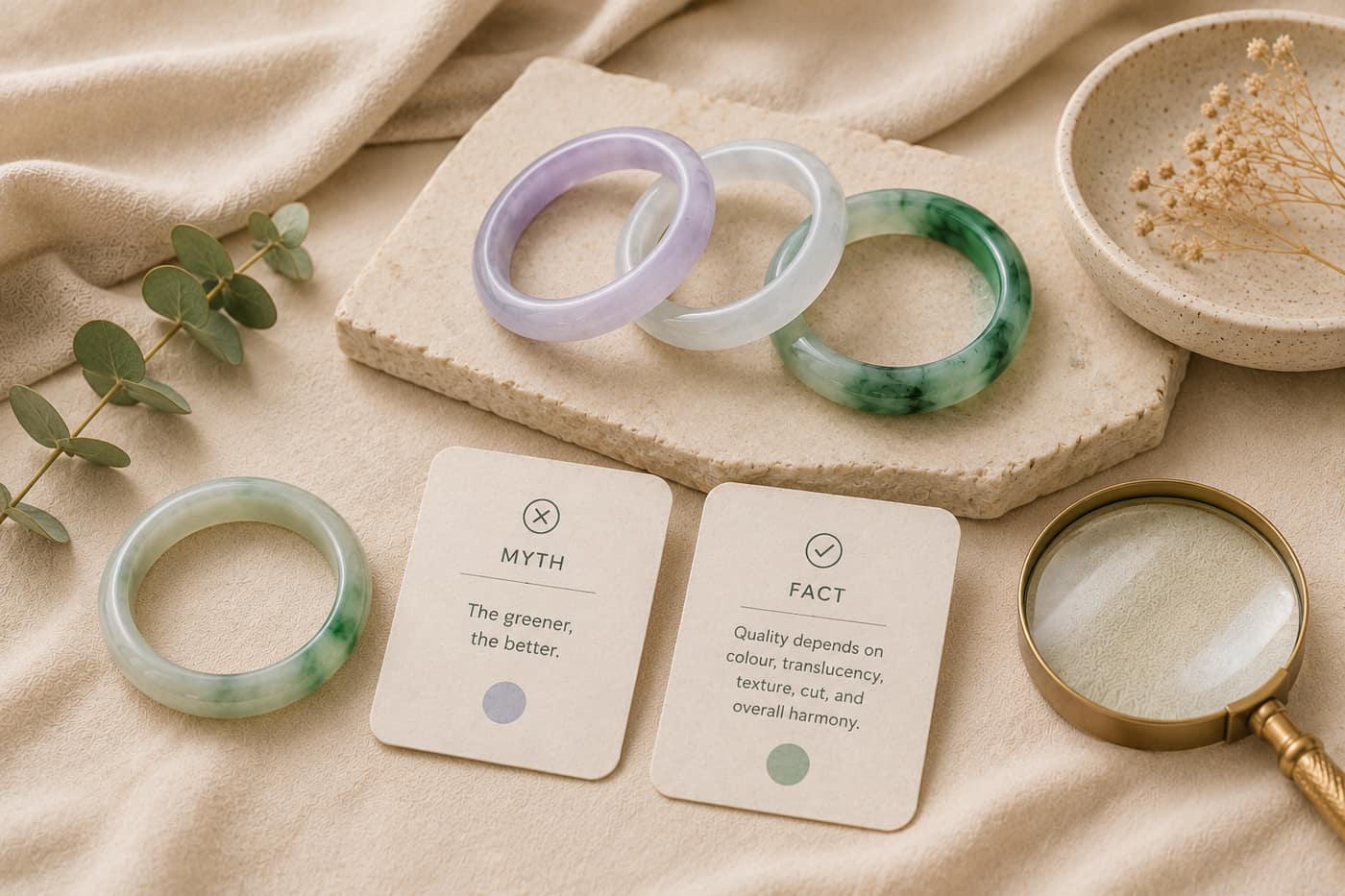
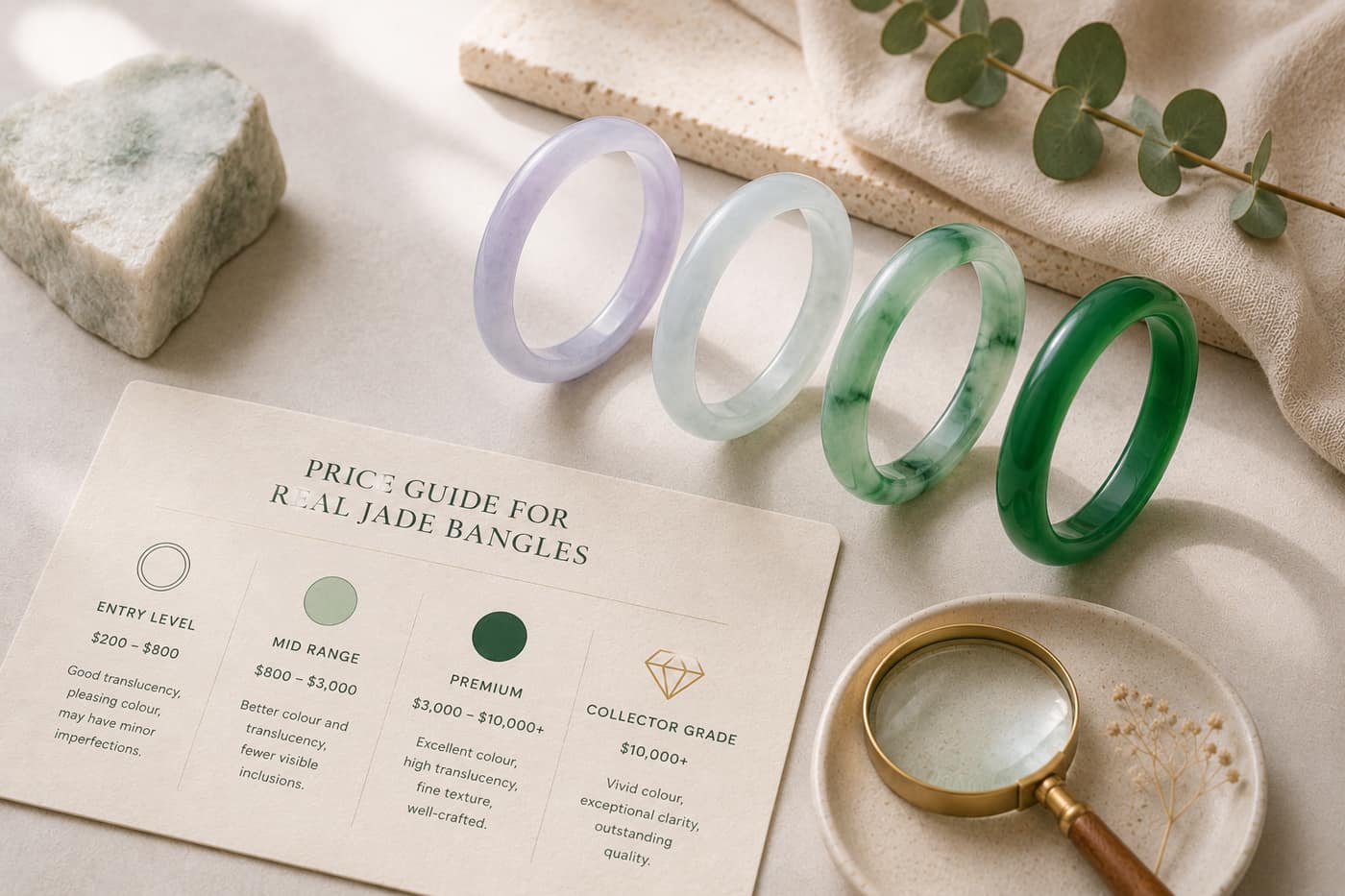
A stubborn myth is that a low price proves a stone is fake. It does not. Genuine Grade A jadeite ranges from under $50 to six figures, and the price is driven by colour saturation, translucency, size, and setting, not by whether the stone is real. A small, pale, or icy piece set in silver can be completely natural Grade A and still be affordable. Judge authenticity on the stone and its paperwork, never on the price tag alone.
The Honest Signs You Can Check Yourself
These are useful first filters. None of them is proof on its own, because treated stone and good imitations can pass them, but together they tell you whether a piece is worth verifying properly.
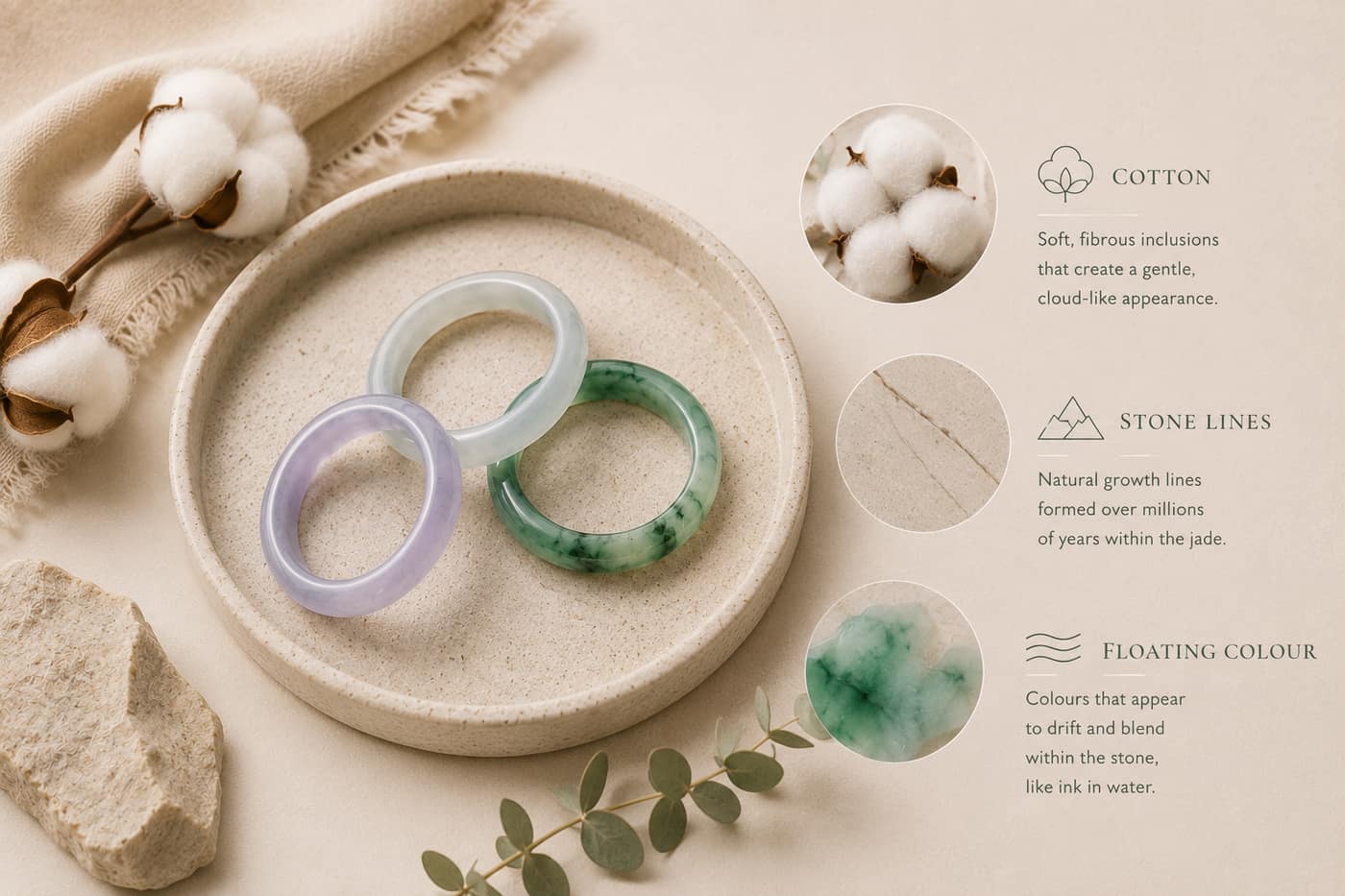
- Natural characteristics. Real untreated jadeite usually carries cotton (棉), fine stone lines (石纹), and gentle colour variation. A stone that looks perfectly flawless and evenly coloured at a low price is a warning, not a prize.
- Sound. Two pieces of Grade A jadeite tapped together give a clear, bright, ringing tone. Treated or plastic pieces sound dull and flat.
- Temperature and weight. Jadeite is dense and stays cool to the touch, warming slowly. Glass warms faster and plastic feels light and warm almost immediately.
- Colour behaviour. Natural colour sits within the stone and varies across it. Dyed colour tends to pool along surface cracks and look flat and even. Always look in natural daylight, never under a warm indoor bulb.
Red Flags of Treated or Fake Jade
- Flawless, glassy, vividly even colour offered at a suspiciously low price.
- Colour concentrated in surface cracks, or a faint web of resin lines under strong light.
- A seller who will not state the origin, will not disclose inclusions, or calls a piece "perfect".
- A "certificate" that names no accredited laboratory, or that does not match the piece in hand.
The Only Test That Settles It
Home checks narrow things down, but the definitive answer comes from an independent, accredited gemological laboratory. A lab uses infrared spectroscopy to detect polymer and dye that the eye cannot see. A report stating natural jadeite, Type A, no treatment detected is the proof that matters. A seller-issued card with no accredited lab behind it is not the same thing.
How We Handle It
Every piece in the Pavilion is natural Grade A jadeite, photographed honestly in natural light with its cotton, stone lines, and colour variation shown rather than hidden. You are always free to have any piece tested at an independent lab, backed by our lifetime authenticity guarantee: if a piece is ever found to be anything other than natural Grade A, we refund you in full. That is the whole point of buying from someone who discloses instead of polishes over the truth.